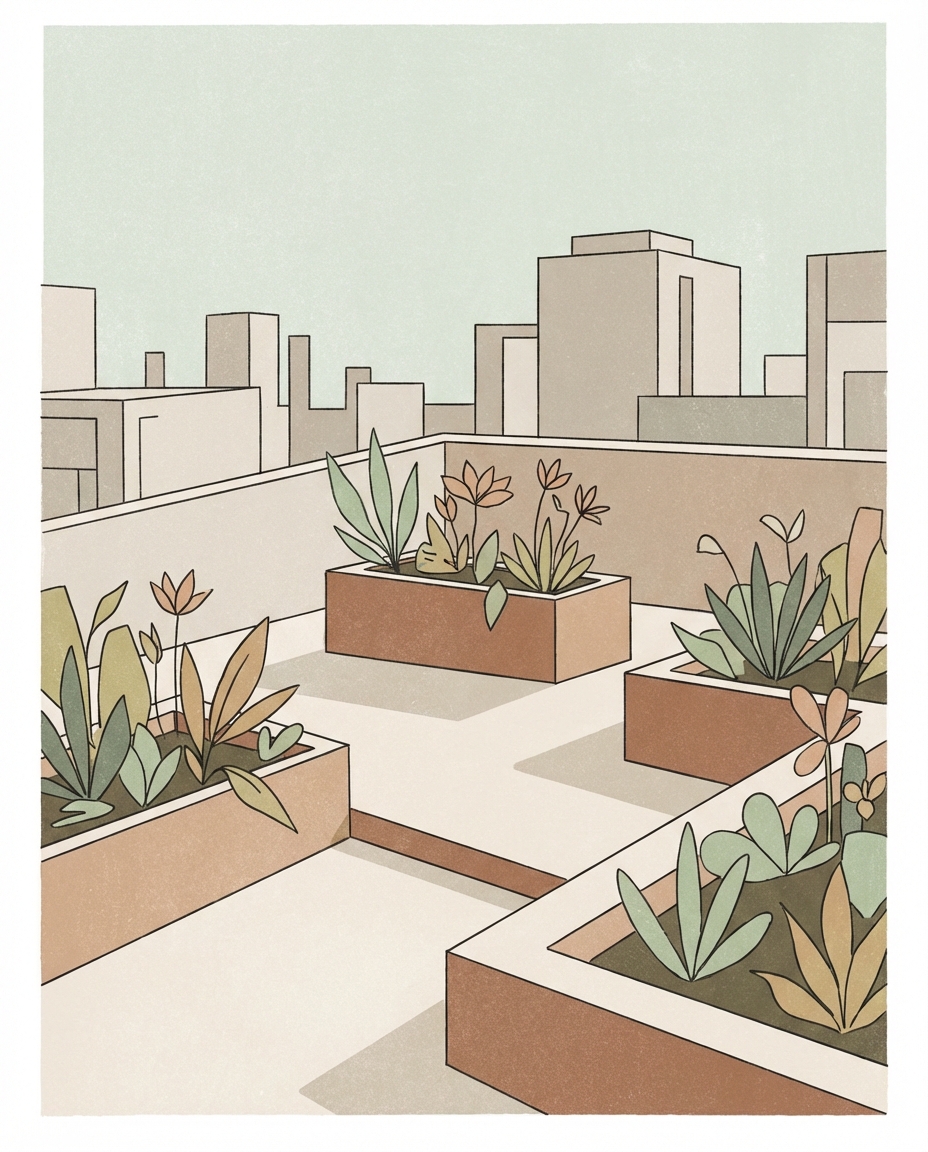
The Engineering of Urban Greenery
In the density of the city, horizontal space is a luxury few can afford. However, the air above your patio or balcony is free real estate waiting to be claimed. Vertical gardening is not just a stylistic choice; it is a structural necessity for the modern urban cultivator. By shifting your focus from the floor to the walls, you can triple your growing capacity without sacrificing your square footage.
Whether you are working with a fire escape (check your local regulations), a juliet balcony, or a rooftop terrace, the principles remain the same: anchor, climb, and sustain. This guide dives into the mechanics of growing upwards, serving as a critical pillar in our Ultimate Guide to urban gardening.

1. Structural Supports: Trellises and Grids
The backbone of any vertical garden is its support system. In an urban setting, you want materials that blend with the industrial aesthetic—think galvanized steel, rebar, or blackened wood. A simple stake isn't enough for heavy producers. You need a grid.
Cattle Panels and Remesh: These heavy-duty wire grids are inexpensive and practically indestructible. Mounted slightly off a wall using spacers, they provide excellent airflow and sturdy support for heavy climbers like squash or indeterminate tomatoes. They create a clean, geometric look that fits perfectly with modern Balcony & Small Space Layouts.
Tension Wire Systems: For a sleeker, barely-there look, install stainless steel eye hooks into masonry and run tension wires between them. This allows vines to appear as if they are climbing the wall itself, providing a softer, floating green facade.
2. The Living Wall: Softening the Concrete
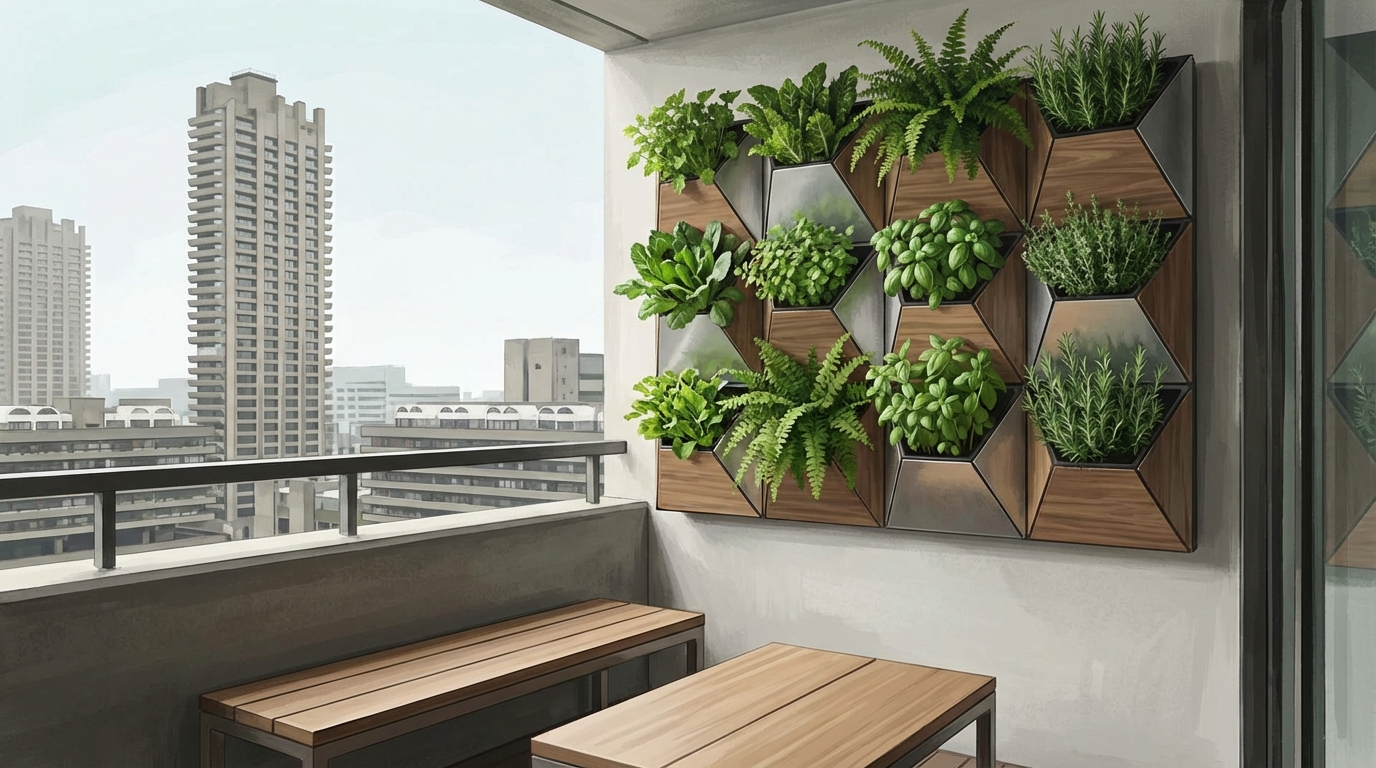
Living walls, or green walls, are the ultimate expression of vertical density. These systems turn a flat surface into a tapestry of plants. While commercial systems can be expensive, DIY felt pocket systems are accessible and effective for renters.
Felt Pocket Planters: These represent a lightweight solution made from breathable, recycled fabric. The fabric allows roots to breathe (air pruning), preventing them from becoming root-bound. They are ideal for shallow-rooted plants like lettuce, spinach, and herbs. Because these pockets dry out quickly, they require attentive watering or a drip line installation.
Rigid Modular Systems: Plastic modular cells that stack or hang offer more root space and better water retention than felt. They act like a vertical stack of traditional pots, making them better suited for plants that need consistent moisture.
3. Suspension and Tiered Shelving
When walls are unavailable or restricted by landlords, look to the ceiling or the railing. Suspension techniques utilize the absolute "deadest" space in your apartment—the air above your head.
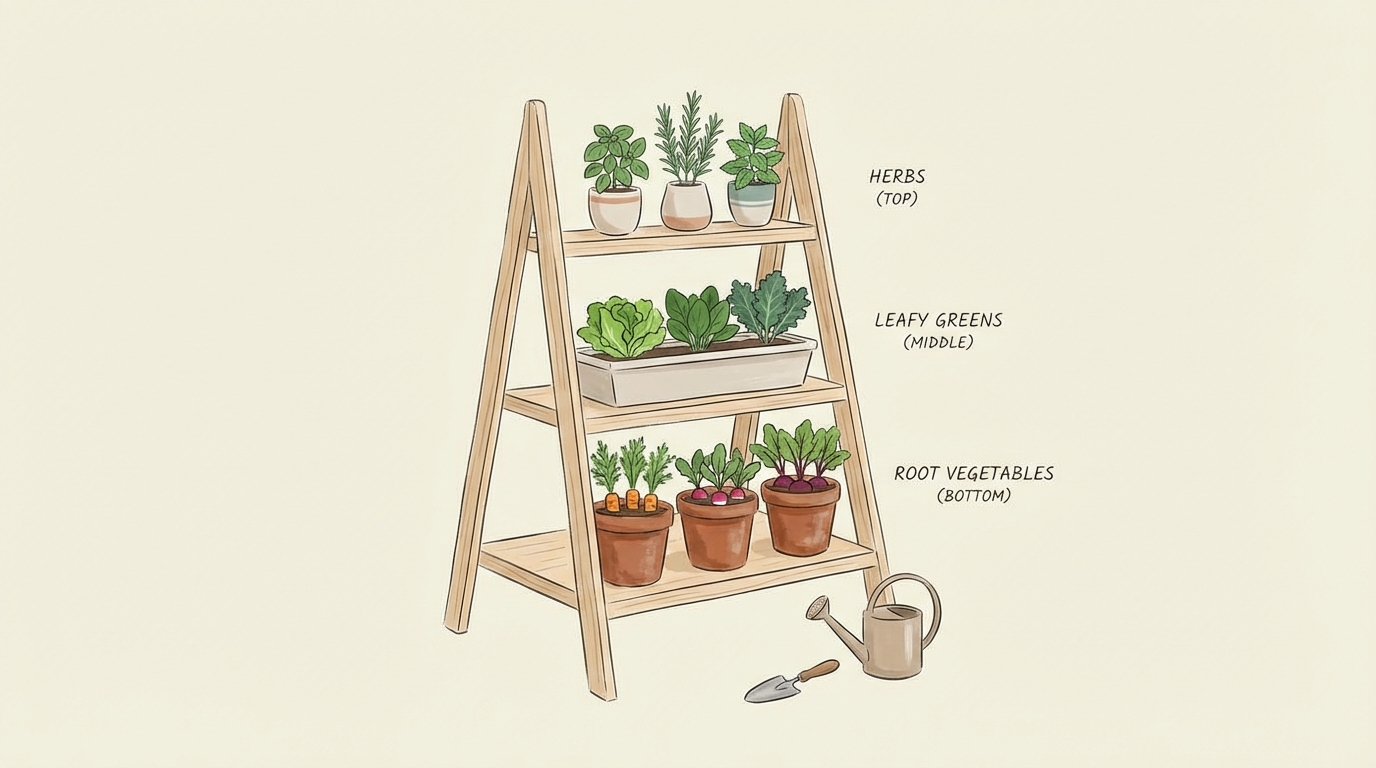
Industrial Pipe Shelving: Constructing a tiered shelf using pipes and wood planks creates a rugged, durable stand that can hold heavier pots. By creating layers, you can grow shade-loving greens on the bottom shelves while sun-lovers bask on the top tier. This method effectively multiplies your floor space by the number of shelves you install.
Rail Planters and Hanging Baskets: Don't overlook the railing. Saddle planters can straddle the balcony rail, growing outwards. Meanwhile, inverted planters or heavy-duty macramé (using rot-resistant synthetic cords for outdoor use) can lower plants to eye level. This is particularly effective for trailing varieties found in our guide to Best Edibles for Containers, such as strawberries or trailing nasturtiums.
4. Feeding the Vertical Engine
Gravity is the enemy of moisture and nutrients in a vertical garden. Water flows downward rapidly, meaning the top plants often dry out while the bottom plants might get waterlogged. Furthermore, the limited soil volume in vertical pockets means nutrients are depleted faster than in raised beds.
Soil Composition: You need a lightweight yet absorbent mix. A standard potting mix amended with perlite (for drainage) and coconut coir (for retention) is essential. Heavy garden soil will compact and potentially damage your support structures with its weight.
Nutrient Density: Because you cannot rely on a deep soil food web, you must supply high-quality fuel. This is where your kitchen waste becomes gold. By utilizing vermiculture or bokashi methods outlined in Apartment Composting Basics, you can create nutrient-rich liquid fertilizers (compost tea) that are easily applied to vertical structures via a watering can or spray bottle.
5. Transitioning Indoors
Vertical gardening techniques aren't strictly for the outdoors. Many urban gardeners bring the structure inside to maximize window light. A tension rod in a window frame can hold hanging herbs, and wall-mounted planters can turn a sunny living room wall into a propagation station.
If your apartment lacks natural light, you can combine vertical shelving with artificial lighting. Attaching LED strip lights to the underside of shelves transforms a decorative unit into a production rack. For a deeper dive into growing without the sun, explore our resource on Indoor Hydroponics & Lighting.
Conclusion
Vertical gardening is the mark of a sophisticated urban gardener. It requires a shift in perspective, seeing potential in the vertical plane rather than just the horizontal. By installing the right infrastructure—be it reinforced trellises, pocket walls, or suspended grids—you transform your home into a multi-layered ecosystem, maximizing every inch of your urban oasis.