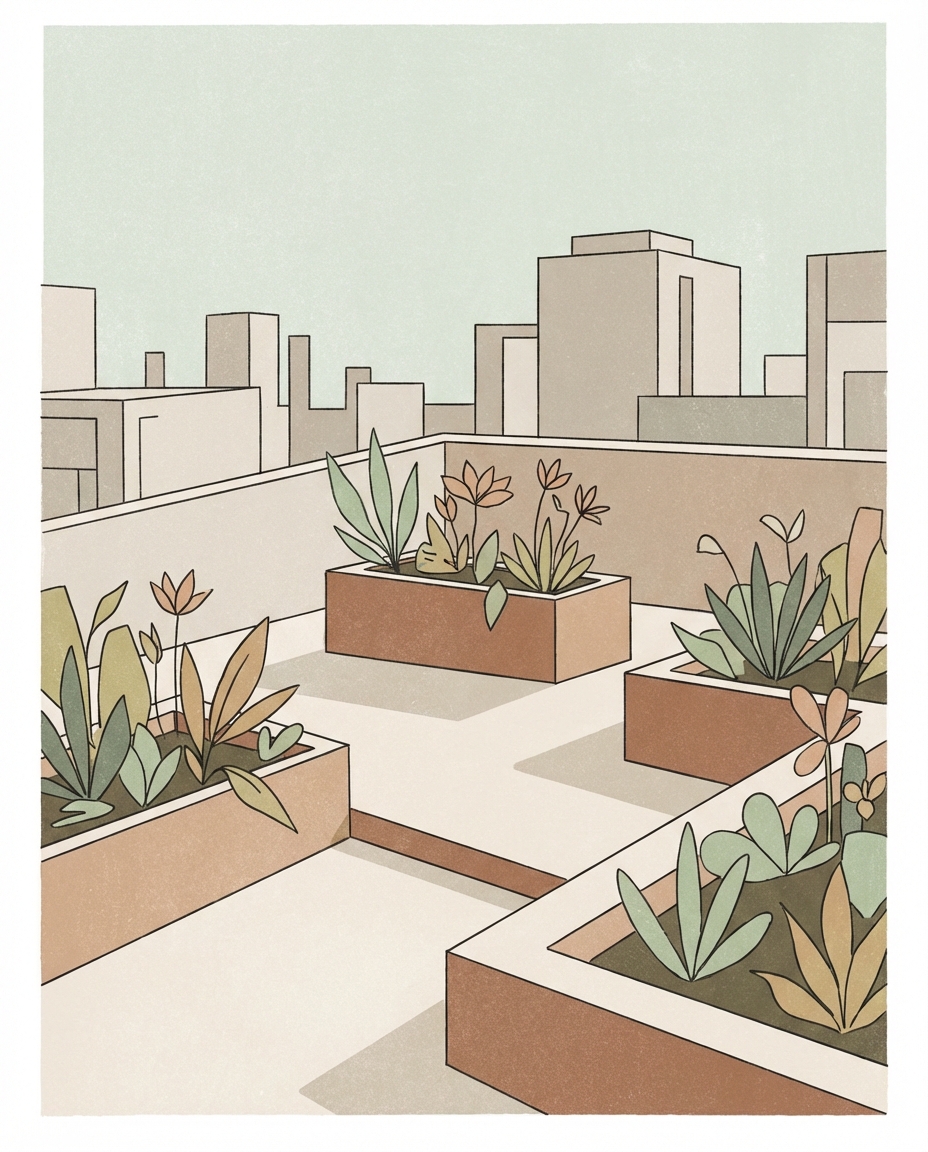
The city doesn't sleep, and neither should your garden. While traditional outdoor gardening is beholden to the whims of weather and the turning of seasons, the indoor gardener operates by a different set of rules. By bringing the sun inside and removing the soil, you transform your apartment from a passive living space into an active production facility.
In our Ultimate Guide to urban gardening, we emphasized that adaptability is the urban farmer's greatest tool. Indoor hydroponics represents the pinnacle of that adaptability. It is the intersection of biology and engineering, allowing you to grow fresh basil in January or crisp lettuce in a windowless hallway. This isn't just gardening; it's climate control.
The Mechanics of Hydroponics: Why Soil-Free?
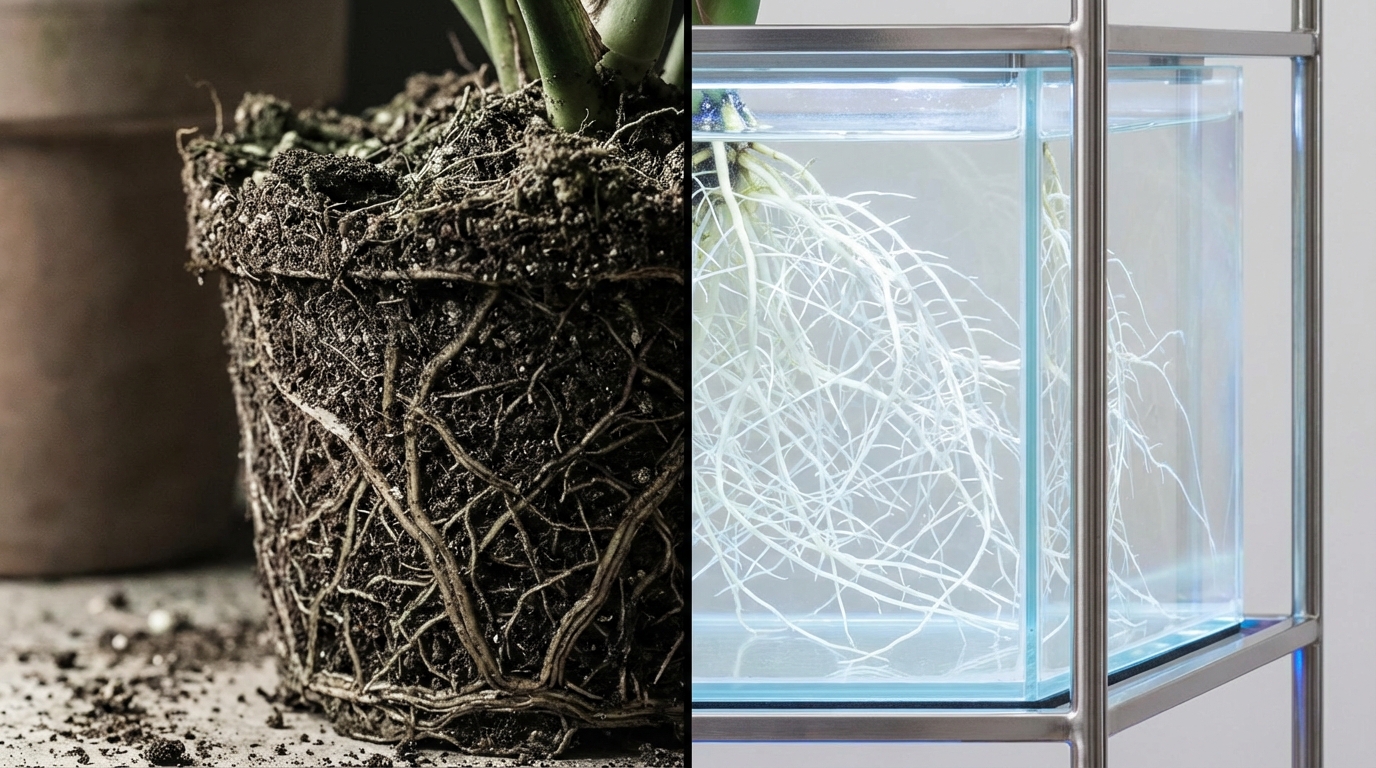
Soil is a medium, a buffer, and a pantry. In nature, plants expend massive amounts of energy searching through the dirt for water and minerals. Hydroponics changes the equation. By delivering a nutrient-rich water solution directly to the root zone, the plant no longer needs to hunt. It can channel that saved energy entirely into foliage and fruit production.
This efficiency is critical when you are dealing with limited square footage. Just as we discussed in Balcony & Small Space Layouts, every inch counts. Hydroponic plants can be spaced closer together because their roots don't compete for territory. The result is higher density and significantly faster growth rates—often 30% to 50% faster than soil.
Illuminating the Process: The Science of Grow Lights
The sun is a powerful reactor that is hard to replicate, but modern technology has come close. If you are moving your garden indoors, the ambient light from your living room lamp is insufficient. Plants require specific wavelengths of light to photosynthesize effectively.
Understanding the Spectrum
Plants "see" light differently than humans. We measure light in lumens (brightness), but plants care about PAR (Photosynthetically Active Radiation). This falls mostly within the blue and red spectrums:
- Blue Light (400-500nm): Critical for vegetative growth. It promotes strong stems and leafy density, making it perfect for the leafy greens found in our Best Edibles for Containers guide.
- Red Light (600-700nm): Essential for the flowering and fruiting stage. If you plan on growing tomatoes or peppers indoors, you need a heavy dose of red light.
LED vs. The Rest
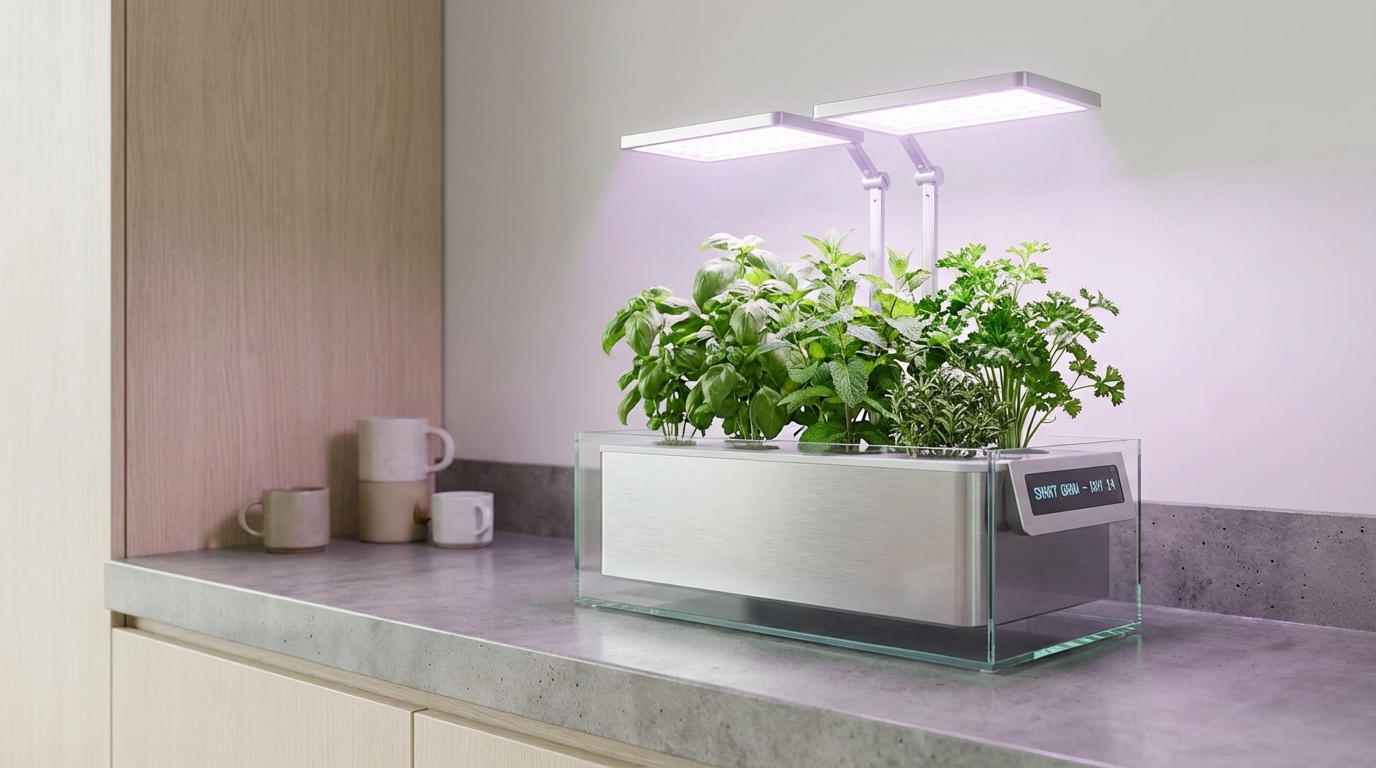
In the past, indoor growers relied on hot, inefficient High-Pressure Sodium (HPS) lights. Today, Full-Spectrum LEDs are the industrial standard for home growers. They run cool, consume very little electricity, and provide a balanced white light that looks good in your home while hitting the necessary PAR peaks for your plants. When shopping, look for "full-spectrum" LEDs rather than the purple "blurple" lights of the past; they allow you to spot plant health issues much easier.
Choosing Your System: Countertop to Vertical
There are several methods to practice hydroponics, ranging from passive setups to active, pump-driven machines. Your choice depends on your space and your DIY confidence.
1. The Kratky Method (Passive)
The simplest entry point. Plants sit in a net pot suspended over a reservoir of nutrient water. As the plant drinks, the water level drops, creating an air gap that allows the roots to breathe. It requires no electricity (other than lights) and no pumps. It's the "set it and forget it" of hydro.
2. Deep Water Culture (DWC)
Similar to Kratky, but with a turbo boost. An air stone is added to the reservoir (connected to an air pump) to constantly bubble oxygen into the water. This allows the roots to remain submerged indefinitely without drowning, resulting in explosive growth.
3. Nutrient Film Technique (NFT)
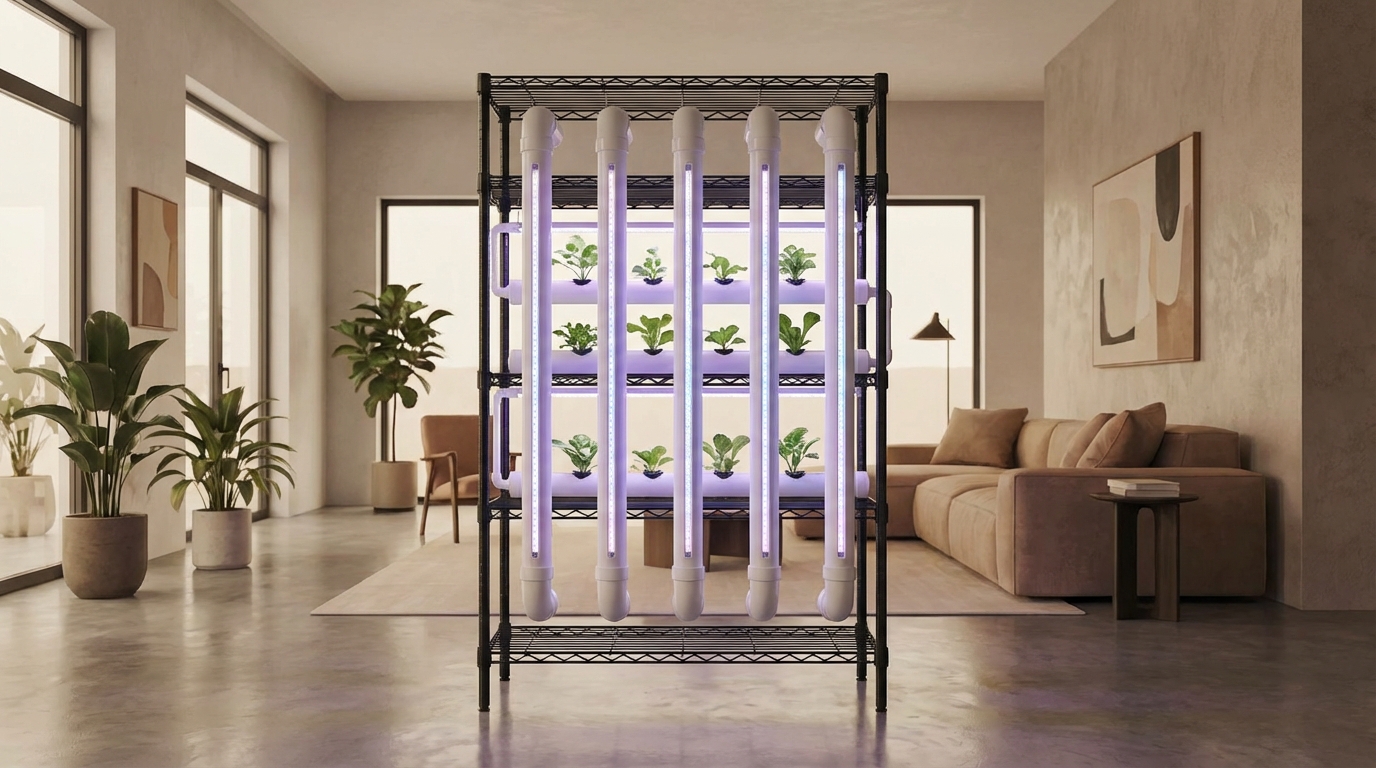
For those looking to maximize vertical space, NFT is the gold standard. A thin film of nutrient water flows constantly through PVC pipes or channels where the roots dangle. This is the method often used in Vertical Gardening Techniques because it is lightweight and modular.
Nutrients, pH, and Sustainability
Hydroponic water must be balanced. You will need to manage the pH level (usually between 5.5 and 6.5) to ensure plants can absorb the minerals. While this sounds technical, simple testing kits make it a routine part of your weekly maintenance check.
One common criticism of hydroponics is the reliance on synthetic bottled nutrients. However, there is a path to closing the loop. While you cannot put raw kitchen scraps into a hydroponic reservoir, you can use the trimmings from your hydro harvest to feed your soil-based balcony plants. To learn how to process those trimmings, check out our guide on Apartment Composting Basics. Furthermore, advanced growers can explore "aquaponics," which uses fish waste to naturally fertilize the water, creating a fully organic ecosystem.
Final Thoughts: The Indoor Industrialist
Adopting indoor hydroponics and grow lights transforms you from a gardener into an indoor farmer. It creates a bold, green aesthetic in your home and guarantees a supply of fresh produce regardless of the concrete jungle outside. It requires an initial investment in gear and a willingness to learn the physics of light and water, but the reward is a year-round harvest that defies the seasons.