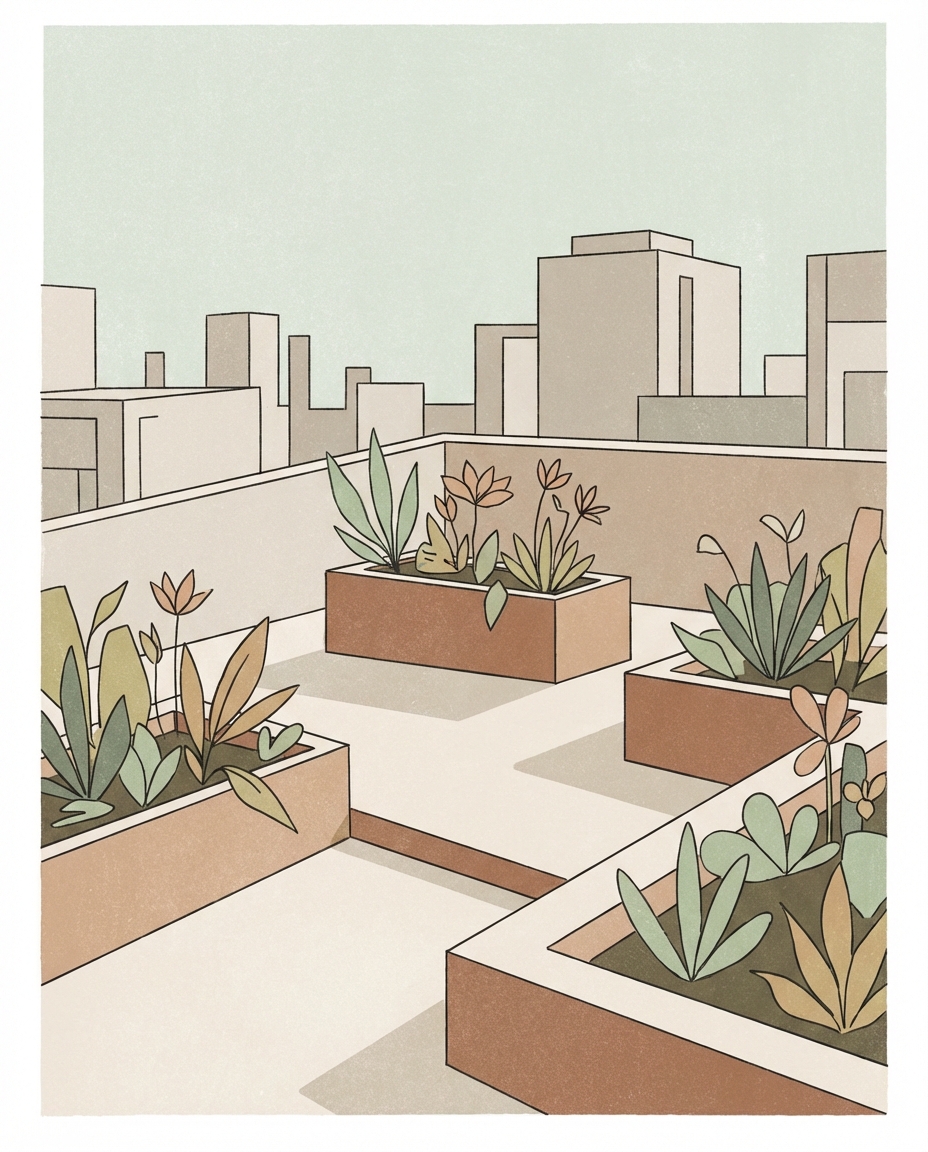
The Urban Loop: Why Compost Indoors?
In the ecosystem of an urban dwelling, waste management is often an afterthought—a bag tied up and dropped down a chute. But for the urban gardener, that waste represents a lost resource. When you are cultivating a lush oasis based on our Ultimate Guide to urban gardening, you quickly realize that soil vitality is the limiting factor in containers.
Composting in an apartment isn't just about reducing landfill impact (though that is noble); it is about closing the loop. It is about taking the energy from your discarded banana peels and coffee grounds and transferring it into the tomato plants growing on your fire escape. It transforms your apartment from a consumption unit into a production unit.
Many beginners hesitate, fearing foul odors or insect infestations. However, with modern methods like vermiculture and airtight fermentation systems, composting can be as clean and routine as loading the dishwasher. Whether you have a spacious patio or just a sliver of counter space, there is a system that fits your square footage.
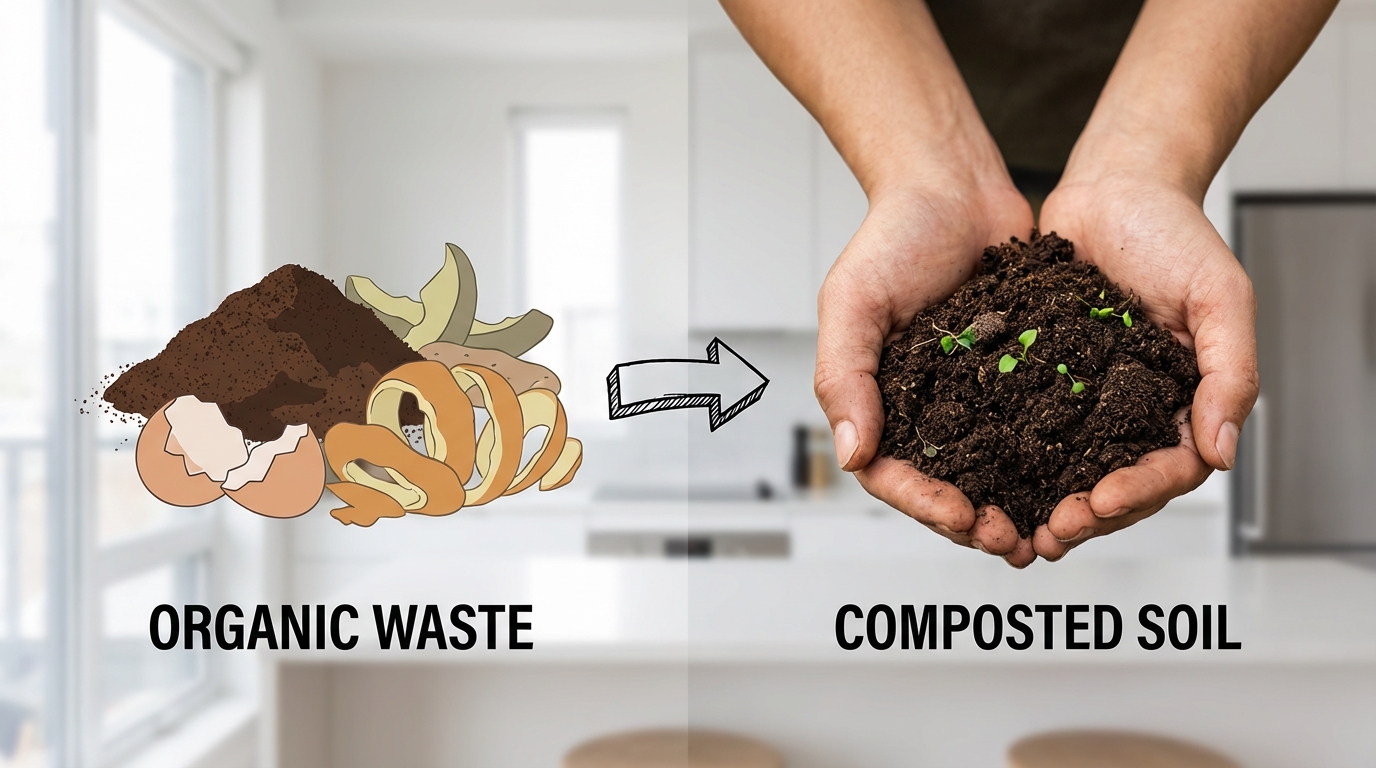
The Chemistry of Rot: Greens vs. Browns
Before buying a bin or ordering worms, you must understand the fuel mixture. Successful composting is a controlled burn of organic matter, fueled by nitrogen and carbon. In the composting world, we refer to these as "Greens" and "Browns."
The Greens (Nitrogen): These are your wet, fresh materials. They provide the protein and nutrients for the microorganisms (or worms) to grow.
- Vegetable peelings and fruit scraps
- Coffee grounds (filters included)
- Tea bags (staples removed)
- Fresh plant trimmings
The Browns (Carbon): These are dry, bulky materials. They provide energy, absorb excess moisture, and create air pockets to prevent anaerobic (smelly) bacteria from taking over.
- Cardboard (egg cartons, toilet paper rolls)
- Shredded paper (non-glossy)
- Dried leaves
- Sawdust (untreated wood only)
The Golden Rule of Apartment Composting: Always add more Browns than Greens. A ratio of 2:1 or even 3:1 (Browns to Greens) ensures your bin smells like a forest floor, not a dumpster. If you are struggling with space for storing browns, consider how this integrates with your Balcony & Small Space Layouts; a decorative wicker basket can hide a month's supply of shredded cardboard seamlessly.
Method 1: Vermicomposting (The Worm Bin)
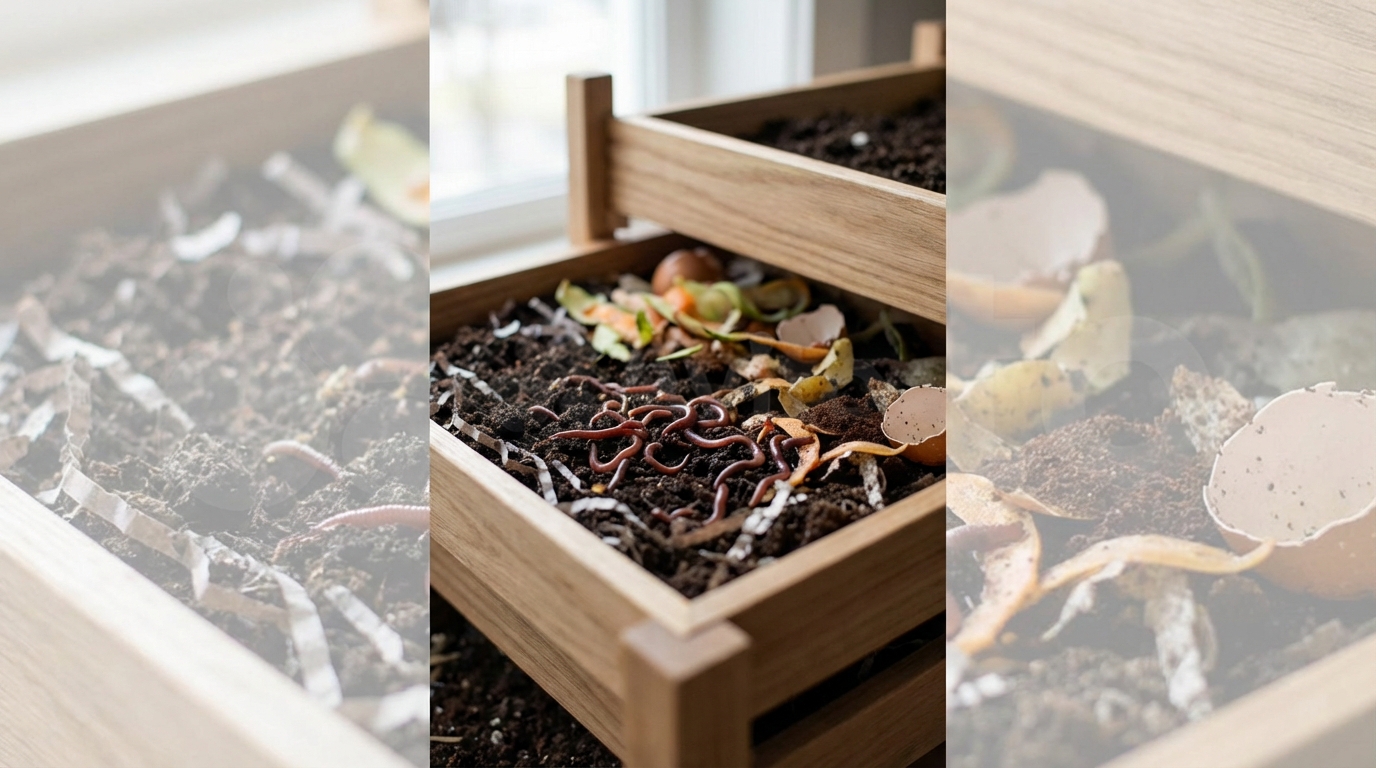
Vermicomposting is the gold standard for indoor composting. It relies on Eisenia fetida (Red Wigglers), a specific type of earthworm that thrives in captivity and consumes half its body weight in scraps daily. Unlike earthworms found in the deep soil, these are surface dwellers perfectly suited for shallow bins.
The Setup: You can buy a tiered "worm factory" or build a DIY version using opaque storage totes with drilled air holes. The system is simple: you create a bedding of damp shredded paper, add the worms, and bury your food scraps beneath the bedding.
Why it works for apartments:
- Odorless: If managed right, it smells earthy.
- Fast: Worms work 24/7.
- High-Value Output: Worm castings are arguably the best fertilizer on earth.
However, worms have dietary restrictions. Avoid dairy, meat, oils, and excessive citrus or onions. These can harm the worms or cause the bin to go acidic. For those maximizing their harvest with our Best Edibles for Containers, worm tea (the liquid runoff) is an instant injection of nutrients for hungry crops like peppers and tomatoes.
Method 2: Bokashi (Fermentation)
If the idea of keeping live worms under your sink is unappealing, or if you cook with a lot of meat and dairy, Bokashi is your industrial-strength solution. Originating in Japan, Bokashi uses an anaerobic (no air) fermentation process inoculated with effective microorganisms (EM).
The Process: You need an airtight bucket with a spigot at the bottom. You layer your food scraps—including meat, bones, and cheese—and sprinkle them with Bokashi bran (inoculated wheat bran). You press the air out and seal the lid.
The Pros and Cons:
The major advantage is that it handles all food waste and is completely compact. It fits easily into a cabinet. The downside is that Bokashi doesn't produce finished soil immediately. It "pickles" the waste. After two weeks of fermentation, the waste looks the same but is chemically changed. You must then bury this pickled waste in soil (either in a large outdoor pot, a balcony planter, or a community garden) to finish breaking down, usually taking another 2-4 weeks.
This creates a "two-step" dance, but it is incredibly effective for nutrient recycling. If you are utilizing Vertical Gardening Techniques, a large planter at the base of a trellis is the perfect spot to bury your Bokashi "pre-compost" to charge the soil for the season.
Method 3: Electric Composters
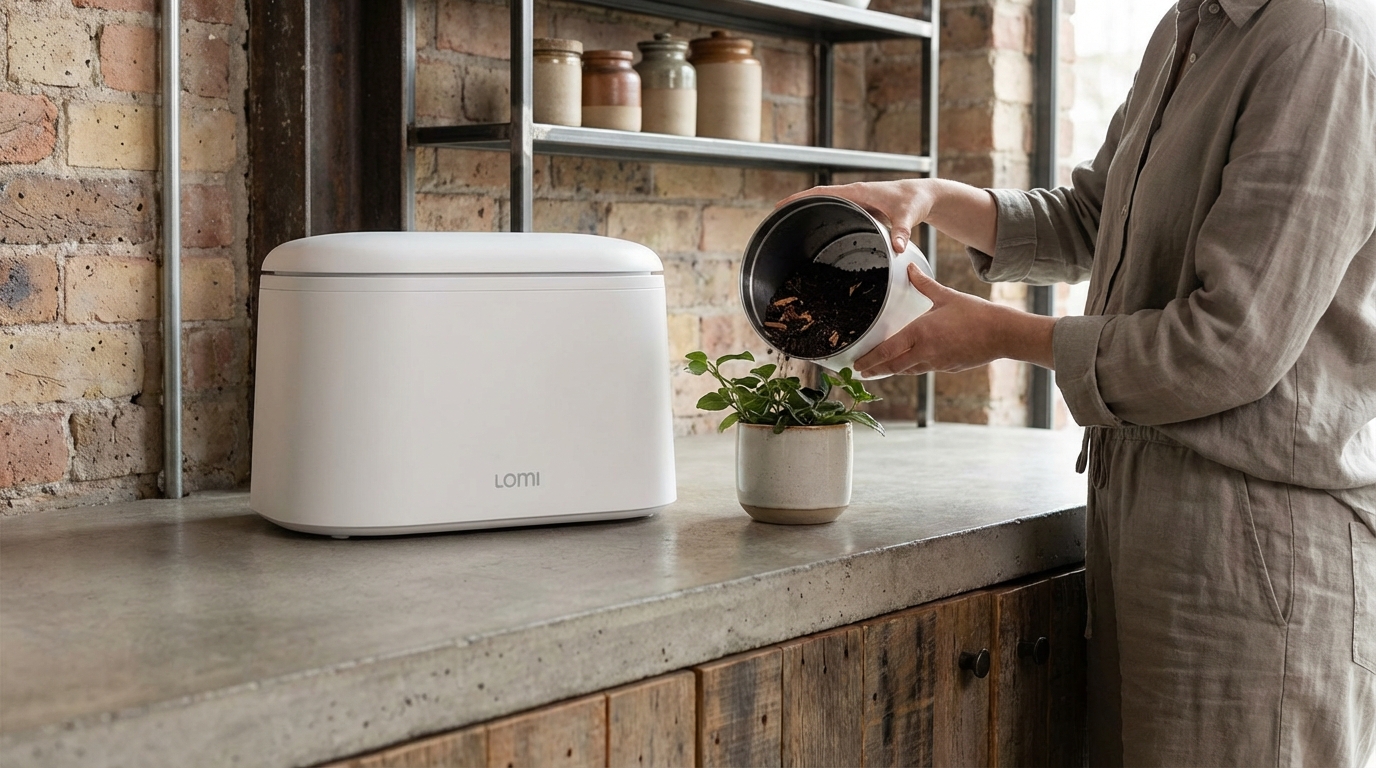
For the tech-savvy urbanite who values speed over biology, electric composters (like Lomi or Vitamix FoodCycler) are entering the market. These are essentially countertop dehydrators and grinders. They heat and pulverize scraps into a dry, soil-like substance in hours.
Reality Check: While convenient, the output is often dehydrated food, not biologically active compost. It needs to be rehydrated in soil to break down fully. However, it reduces volume by 90% and removes all water weight and smell instantly. If you are interested in high-tech growing methods, you might also want to explore Indoor Hydroponics & Lighting, where technology replaces traditional soil cycles entirely.
Troubleshooting Your System
Even the best systems can have hiccups. Here is how to handle the most common apartment composting issues:
- Fruit Flies: The bane of the indoor gardener. Solution: Freeze your scraps before adding them to the bin (kills eggs). Always cover fresh food with a thick layer of Browns/paper.
- Ammonia Smell: Too much nitrogen (Greens). Solution: Add a massive amount of shredded cardboard or newspaper and stop feeding for a week. mixing it thoroughly.
- Rotten Egg Smell: Anaerobic conditions (no oxygen). Solution: Your bin is too wet. Add dry browns and aerate (stir) the mixture to get oxygen back into the pile.
Using Your Black Gold
Once your compost is dark, crumbly, and smells like rain, it is ready. In an apartment setting, you likely won't have enough compost to fill pots entirely. Instead, use it as a top dressing or a mix-in.
Mix 1 part compost with 3 parts potting soil when refreshing your containers in the spring. This rejuvenates old potting soil, allowing you to reuse it rather than hauling heavy bags up four flights of stairs. It adds the microbial life that sterile potting mixes lack, acting as a slow-release probiotic for your urban jungle.